What Do You Take With You In Your Trail Pack?
When I ride the trails, I always have my trail pack with me, and depending on where I am or who I’m with, what I have with me will determine what I have. Extra weight is extra weight, no matter what form it’s in—Gatorade, sandwiches, or zip ties—you, the rider, must control every ounce.
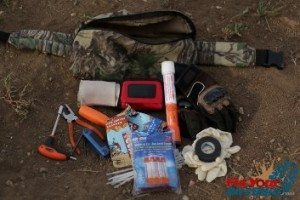 Always be prepared when riding; something as simple as electrical tape might mean the difference between riding or walking back to your truck. You can’t take your toolbox with you, but you can take a few items that will do the job in a pinch. This is a list of things I have in my trail pack.
What I Carry In My Trail Pack
- Cell Phone
- Emergency Whistle → https://amzn.to/3WvQXd4
- Signal Smoke → https://amzn.to/4hv9luZ
- Signal Flares → https://amzn.to/4h61G6x
- First Aid Kit → https://amzn.to/3EkrUDy
- Ace Bandage
- Chain Master Link → https://amzn.to/3Chfig7
- Spare Tube → https://amzn.to/4jx8sE3
- Air Pump → https://amzn.to/4g9EVxd
- Electrical Tape
- Zip ties
- Paracord
- JB Weld → https://amzn.to/4hohYHy
- Hex Wrenches → https://amzn.to/4julbHp
- Multitool → https://amzn.to/4jqewy1
- Mini Socket Set → https://amzn.to/3E3rotQ
- Multi-bit Screwdriver → https://amzn.to/40KwQL2
- Clif Bars
- Gatorade
- Camelback → https://amzn.to/3PMFguZ
- Backup Gloves
- Rubber Gloves
Let’s Start With Emergency Equipment
Every rider knows a certain level of risk is involved with riding a dirt bike. Flying through the trees on 250 lbs of metal powered by explosions can hurt you, so make sure someone can find you if you accidentally climb a tree or take a shortcut down a mountain. No matter how good of a rider you are, you will never be better than what happens. The following are emergency items I have in my trail pack every time I ride.
Ride With A Cell Phone
No matter where I am riding, I will always have, at a minimum, a fully charged cell phone in my trail pack. I take a pre-paid flip phone I bought at Walmart for $15. The phone is not activated, but if the phone has reception, I can call 911.
I don’t like to take my smartphone on the trail with me because I like it and don’t want to have to replace it. If I am going on a long ride, I will wrap my nice phone in a small towel for some cushion, then put the wrapped phone in a zip-lock bag to keep it dry.
Emergency Signals
Whistle: A $.99 white could save your life. You can’t yell as loud as you can blow a whistle; you can blow a whistle a lot longer than you can.
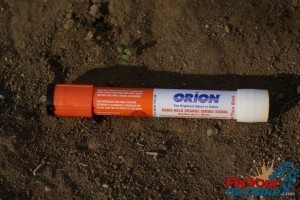
Signal Smoke: I carry a signal smoke stick that burns orange Smoke for one minute and is visible for five miles. Orange Smoke is the universal help signal and any law enforcement or EMS that sees it will respond. If local authorities don’t see the Smoke, anyone with common sense who sees it will call it in. Signal smoke isn’t cheap (about $15), but it’s priceless when it saves your life.
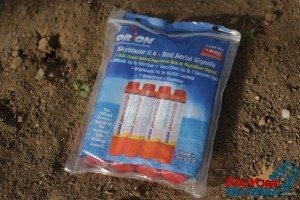
Signal Flares: If you find yourself stranded at night, signal smoke won’t do any good, so I also have a four-pack of aerial flares in my trail pack. These flares shoot 450 feet into the air, burn for 7 seconds, and burn at 16,000 candelas. If anyone is outside and one of these goes off, it’s tough to miss.
Side Note: Do NOT play with emergency flares or Smoke. I set off an emergency smoke flare when I was a kid, and the sheriff and EMS didn’t appreciate the false alarm. If I were older, I would have received a considerable fine.
First Aid On The Trails
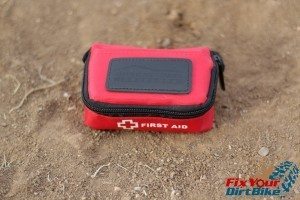
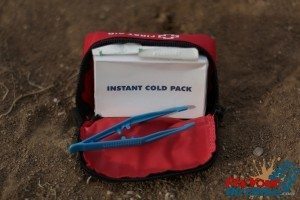
First Aid Kit: I keep a basic kit in my trail pack. Mine is no bigger than a bar of soap, and I got it free from the American Red Cross. My tiny first aid kit includes bandages, plastic tweezers, and alcohol swabs, but I mainly have it for the instant cold pack. If I go down and sprain something, I can get chilly on it immediately to avoid swelling. However, a cold pack will not fix my dented exhaust.
I do keep a full kit at the camp/truck with all the big stuff, such as gauze, hydrogen peroxide, sutures, etc.
Another Side Note: Don’t try to stitch something if you don’t know how to do it. Using tape will work until a medical professional can reach the injury.
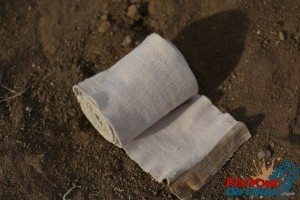
Ace Bandage: An Ace Bandage can serve multiple purposes, such as compressing sprains, securing a cold pack, holding a splint in place, and wetting with cool water to treat exhaust pipe burns. It is one of the most versatile tools in your trail pack, and it doesn’t cost much.
Basic Supplies For Your Trail Pack
I would rather be hungry and thirsty than stranded, so tools take priority over food when preparing my trail pack. I can’t fix my dirt bike with a banana. These tools will cover almost anything on the trail. When I get a flat tire, I can still get back to the truck. When my handlebars are broken, I have bigger problems.
Master Link: If you break a chain, a master link will get you back to the truck.
Spare Tube: You only need to pack the front tube. In a… pinch… You can shove a 21-inch tube in the rear tire.
Air Pump: A spare tube won’t do you much good without a way to fill it!
Spare Spark Plug: A fouled spark plug sill strands you as quickly as a flat tire.
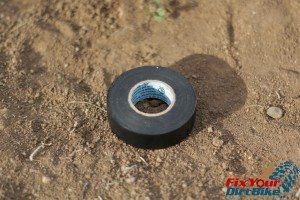
Tape: electrical tape is the way to go, it can be used for easy waterproofing, and in an emergency can be used for compression or to secure a splint. Stay away from duct tape. In any other situation, duct tape is the king of tape, but it’s useless when wet. Plus, 10 feet of duct tape is 10x bigger than 10 feet of electrical tape, so you’re using up much space in your trail pack. (I may have exaggerated, but you know what I mean)
Zip ties: Is it loose? Zip ties. What broke off? Zip ties. Zip ties are essential for quick fixes and take up very little room. There’s almost no reason not to have them in your trail pack. Case in point: I have used zip ties to secure slipping dirt bike grips after taking my bike for a swim. I’ve even used them to ensure the rear brake reservoir after a close call with a rock.

Paracord: Parachute rope has an incredibly high tensile strength-to-size ratio. You can use it to make a splint, tie your roost deflector back on, and even make a tow strap.
J.B. Weld: A cold EPOXY weld will fix or patch almost anything on your bike. Just ensure you bring the high-temperature epoxy to the case and your brake lever perch.
Essential Tools For Your Trail Pack
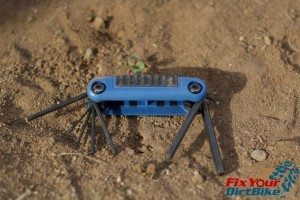
Hex Wrenches: Considering there are no American-made dirt bikes, it’s safe to assume every bike out there is metric. I keep a multi-size Hex (Allen) wrench set with me. I can do anything from adjusting the bars to removing the subframe. What you want to avoid are packs of loose wrenches; they will get lost, and it’s just a matter of time. You also want to avoid cheap wrenches. If your multi-wrench is made of plastic, you may have trouble loosening a stuck bolt.
I had a cheap multi-hex wrench shatter while adjusting my handlebars. Sharp plastic vs. hand skin, plastic wins. Fortunately, I was in my garage to bandage the cut, but I would have been in trouble if that had happened on the trail. Plus, once the plastic frame breaks, you will have no leverage on the wrench, making it almost useless.
Think Compact
Multitool: Another essential tool that needs to be of good quality. A cheap leatherman knock-off won’t do you any good in your trail pack. The quality of the construction and the steel quality in the tools could mean all the difference in a survival situation. Cheap metal, like building a shelter, won’t last long under excessive use.
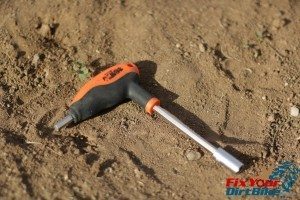
Socket Tool Thing: My first KTM came with a multi-use “T” handle wrench. It came with sockets and screwdriver attachments. KTM claims I can completely tear down and rebuild my bike with this thing, but I haven’t tried. Fortunately, it’s very light, compact, and extremely handy.
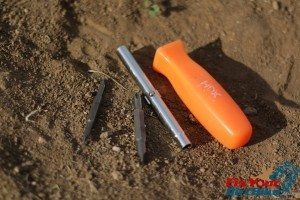
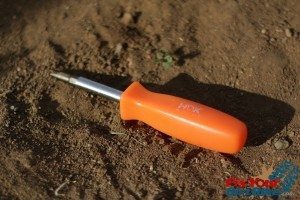
Screwdriver: Obviously, taking a bunch of screwdrivers with you would be impractical, but sometimes, multitools aren’t good enough. I picked up a 6-in-1 screwdriver from Home Depot for $2.99, and it’s working great. The screwdriver has two different sizes of Phillips and slot bits, and the bit holder doubles as a nut driver.
Food and Drink For Riding
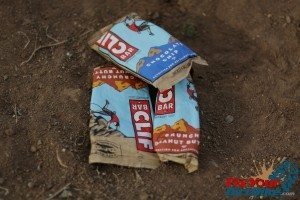
Clif Bars: I prefer Clif bars for their natural (as natural as packaged food can be) energy and protein. Power Bars are candy bars. Those big Met RX bars are too bulky and expensive to carry on a dirt bike. I can get a huge variety pack of Clif bars for around $30. Clif bars also pack a lot of protein and calories in a small bar. You won’t get stomach cramps from overeating, and you won’t fill up your trail pack.
Gatorade: Gatorade is better than water; it is not just a “sports drink” but WAY better than energy drinks. Water does not replace minerals and electrolytes lost during exercise; energy drinks dehydrate you. Gatorade also gives you some calories to work with. If you are serious about your hydration and performance, you should look into some intra-workout powders.
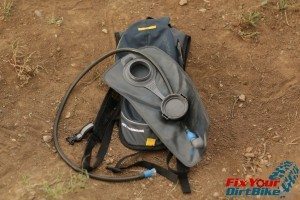
Camelbak (Hydration Pack): Camelbaks are an easy way to keep hydrated on the trail. They don’t cost much, and after a while, you unconsciously drink a steady stream of water (or Gatorade) as you ride. This eliminates the need to stop and carry a bottle with you. Most trail backpacks will have a Camelbak pocket if you want to keep things simple.
Extras For LONG Rides
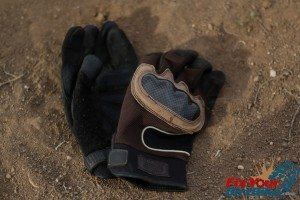
Backup Gloves: I keep a pair of backup gloves in my trail pack for long rides. If I start to feel blisters forming, I can switch gloves to change the contact points on my hands. Also, if I try to go swimming with my bike, I have an extra set of dry gloves.
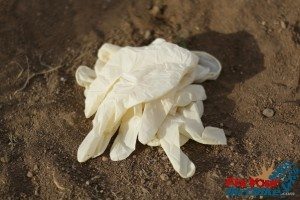
Rubber Gloves: I mainly keep rubber gloves in my trail pack for wet riding. I can put a layer of rubber gloves under my regular riding gloves to avoid long-term water exposure. When your hands get wet while riding, the chance of reduced feeling increases exponentially (if it’s under 70 degrees). The possibility of developing blisters and sores increases as well. Rubber gloves can also be used with electrical tape to seal things. If your buddy goes down, you can wear your rubber gloves while administering first aid.
 It might seem like a lot of stuff for riding dirt bikes. But I can fit it all in a belt pack I used for hunting (It’s just a giant fanny pack).

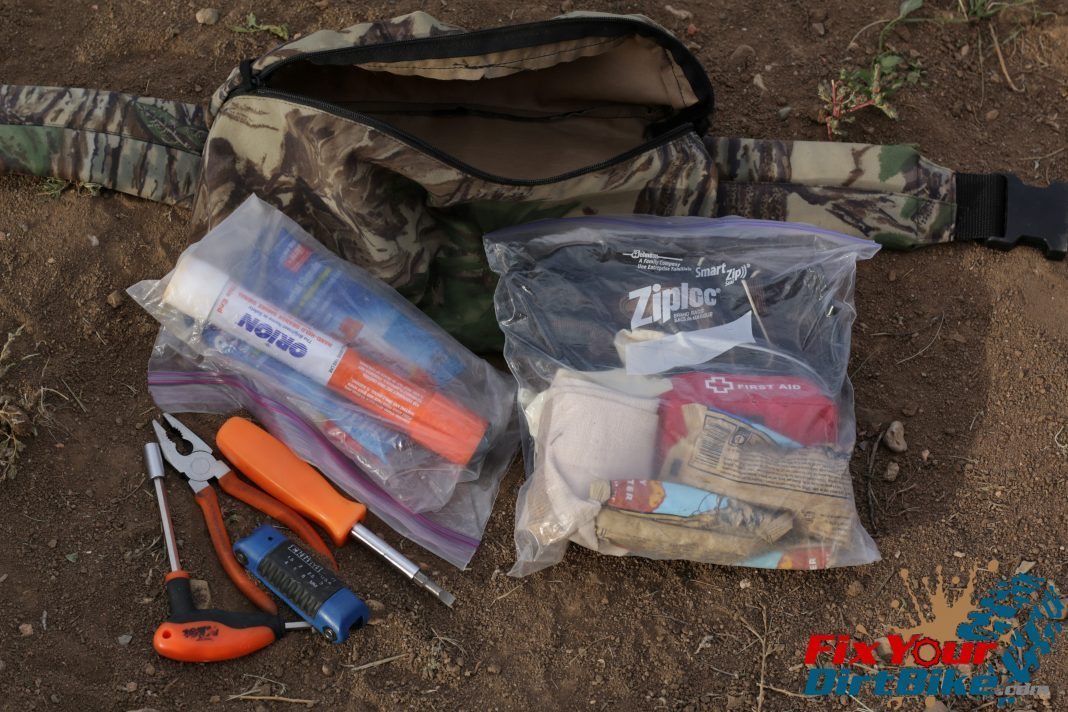
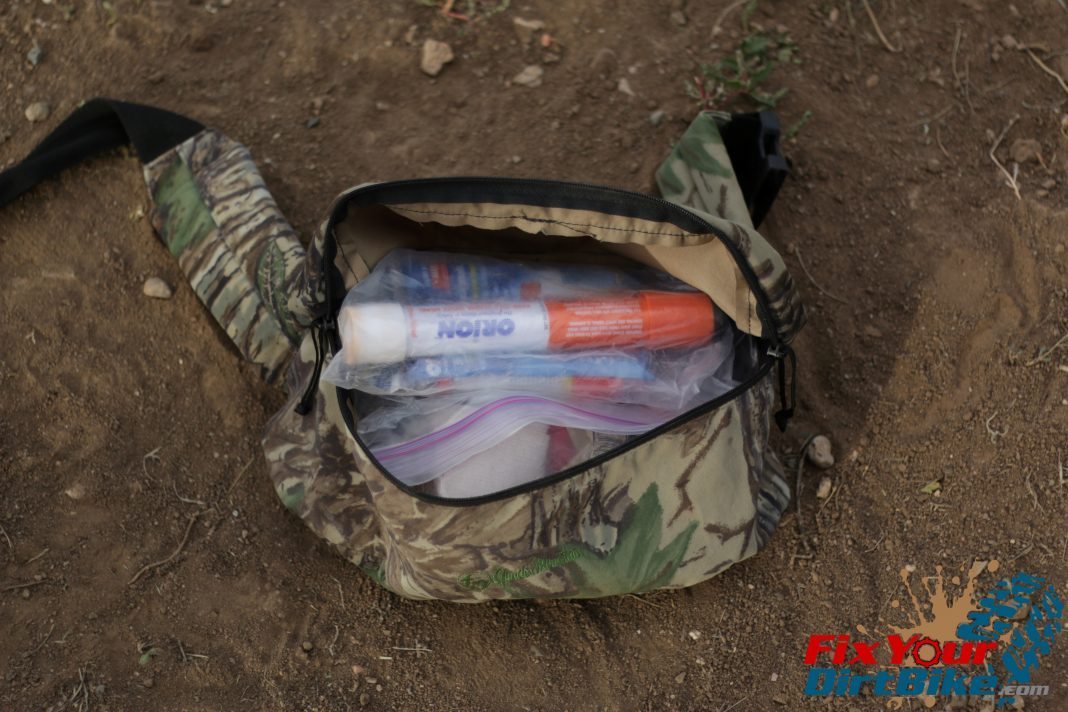
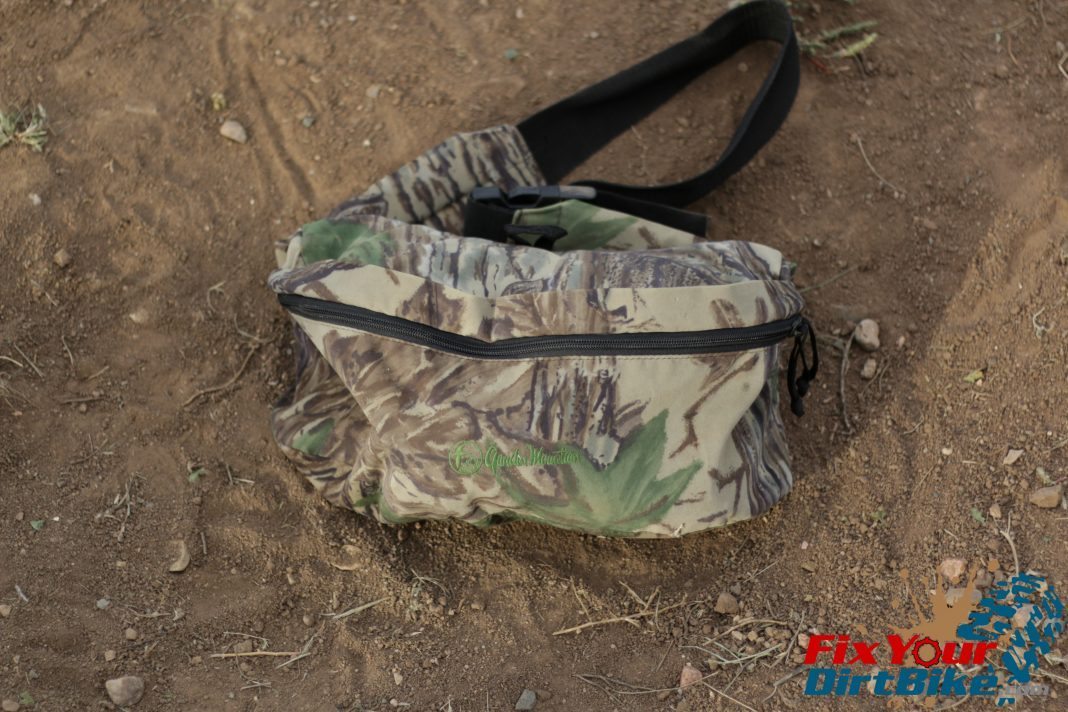
Also, I would rather carry some extra weight if it means I won’t get lost or stranded, I won’t get hungry or dehydrated, and most importantly, if I get hurt, I can patch myself up. In the worst-case scenario, I can call for help. I hope this article will give you a good foundation for building your trail pack!
If you have any questions or comments, please leave them in the comments or on our Facebook page!
Keep Reading – Maxima Racing Fork Oil Review