How to Inspect your 1994 through 2001 Yamaha YZ125 Cylinder
 The Tools You Will Need
- The Tools You Will Need To Service Your YZ125 Top End:
- Foot-Pound Torque Wrench → https://amzn.to/3FVEdr3
- Safety Glasses → https://bulltru.com
- Dremel with Sanding Disc → https://amzn.to/407t6l3
- 2-Stroke Oil → https://amzn.to/3WnyXSl
- Assembly Lube → https://amzn.to/4ar8mty
- Calipers → https://amzn.to/3BRoCXX
- Brake Cleaner → https://amzn.to/4jv9v7a
- Telescoping Bore Gauges → https://amzn.to/4g5reiE
- Feeler Gauge → https://amzn.to/4hd7qen
- Cylinder Brush → https://amzn.to/3W7Trhv
- 8mm Socket
- 10mm Socket
- ¼” Socket Wrench
- ⅜” Socket Wrench
The Specialty Tools You Will Need Are:
- Motion Pro Torque Wrench Adapter → https://amzn.to/3IUQnSg
- Machinists Straight Edge → https://amzn.to/4g4fSM1
Pre-Service Notes
- I recommend opening the Service & Torque Specs in a new tab for easy reference.
- If you need parts and tools, make sure to buy them here! → https://amzn.to/4h4lDKq
- Pictures with captions are below after step.
- If you need any help don’t hesitate to ask!
Yamaha YZ125 Cylinder Inspection
- Clean your cylinder as thoroughly as you can without damaging the mating surfaces or bore.
- Remove all gasket material with a plastic scraper, and smooth any pits or burs with 600-grit emery paper.
- Check the cylinder head mounting studs.
- If you find a loose stud, re-torque it along with the others when the cylinder is back on the bike.
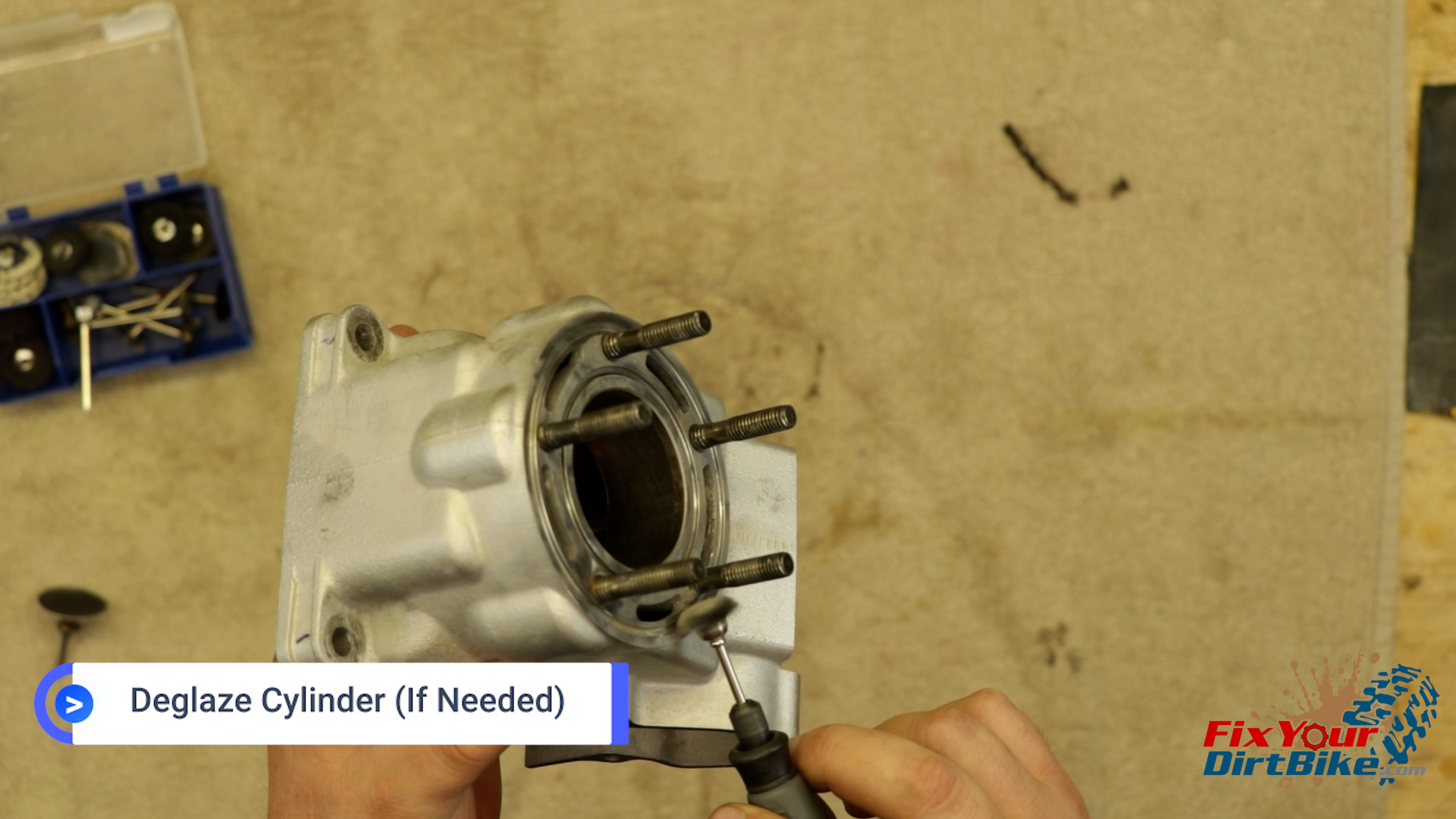
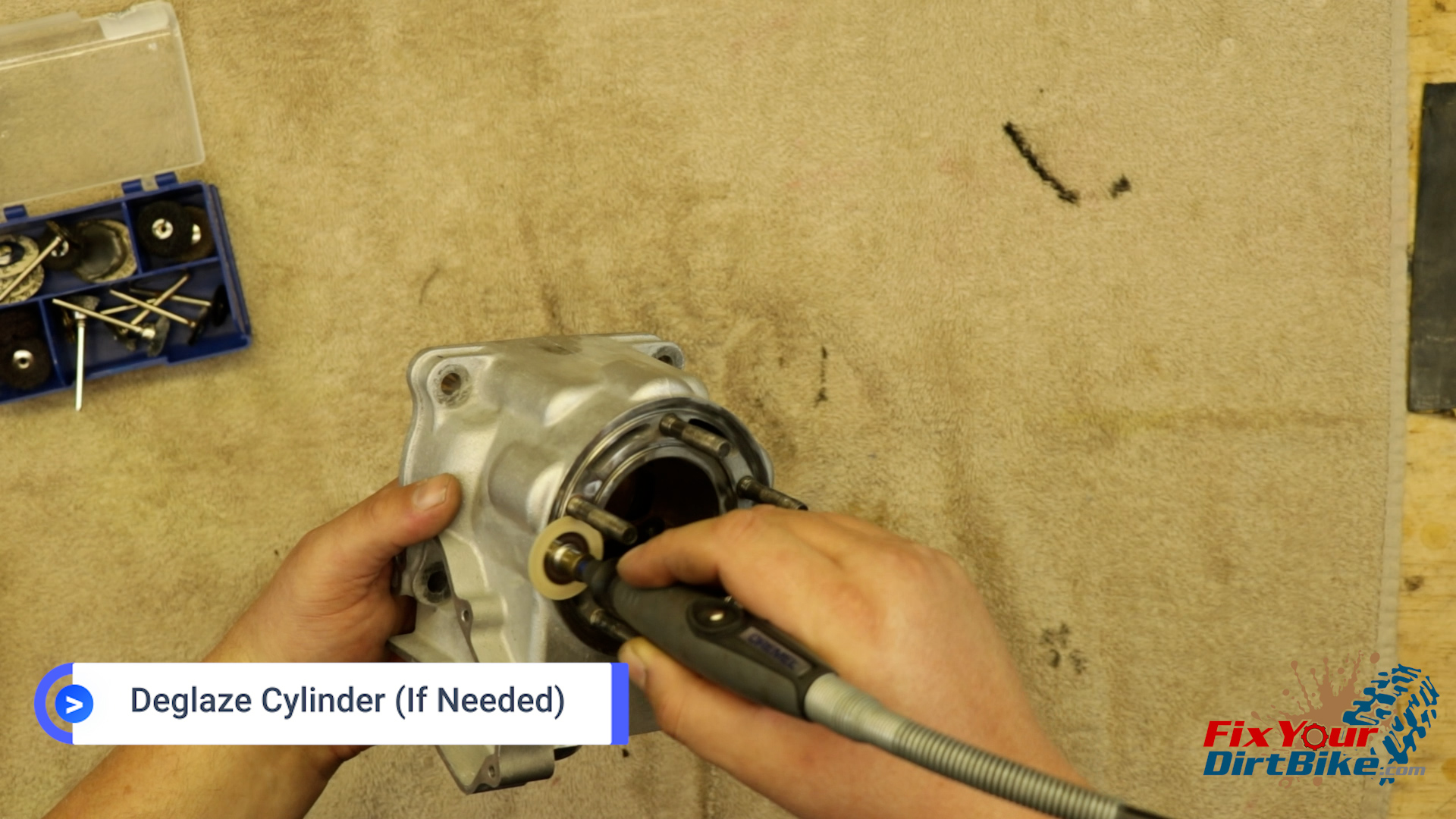
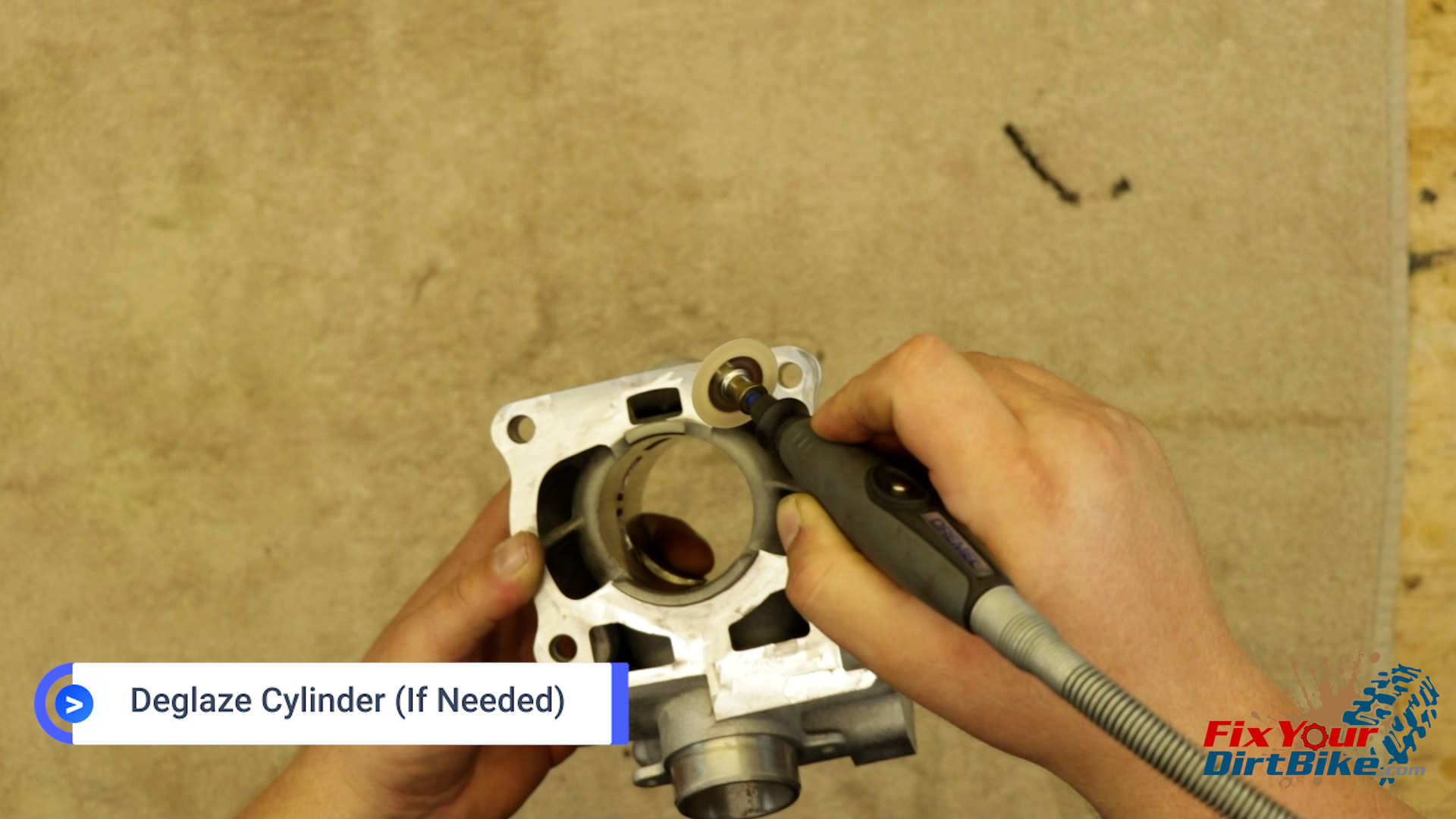
- If carbon buildup is present in the bore, it will need to be deglazed.
- There are two methods of deglazing, depending on your cylinder wall material. Stock, this is an aluminum cylinder with Nikasil plating, and can be carefully deglazed with a scouring pad. However, your cylinder may have been bored out and fitted with an iron sleeve, which can be deglazed with a ball hone.The definite way to tell is using a magnet. If it sticks, it’s sleeved.
- With your cylinder cleaned and deglazed, inspect the water jackets, transfer ports, and exhaust valve sub-chamber for obstruction, wear, or damage.
- Clean the mating surface on the crankcase with a plastic scraper.
- Check the surface for smoothness, and correct any pits or burs.
- Check the mounting studs for tightness and thread condition.
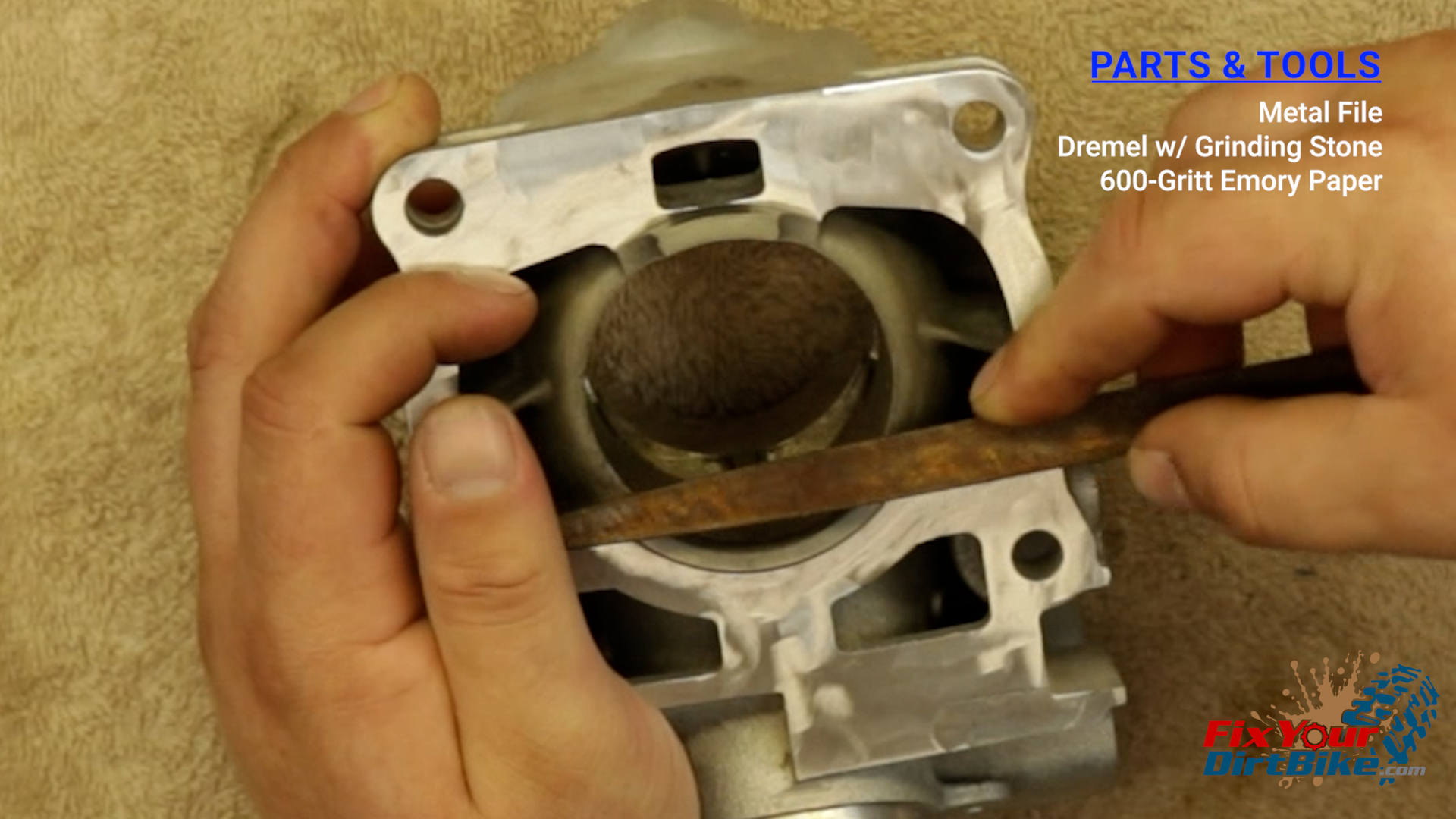
Inspect For Warp
- Lay your straight edge against 2 adjacent studs, and try to fit a feeler gauge underneath.
- Record any found gaps.
- If you find any gaps, double-check the surface for smoothness and try again.
- The warp limit for the cylinder is 0.0012 inches.
- If your cylinder is out of spec, It will need to be resurfaced at a machine shop.
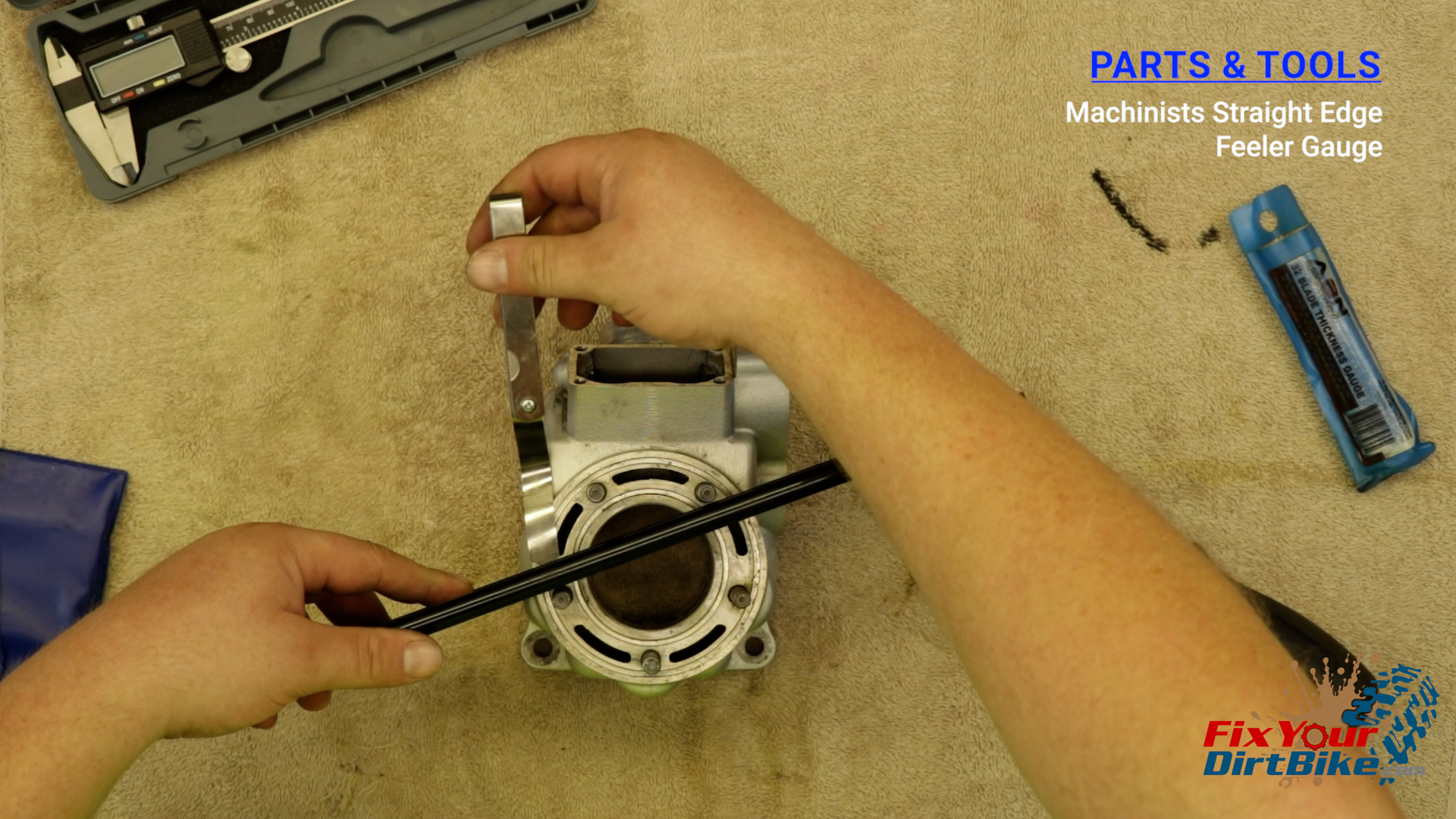
5 – Lay your straight edge against 2 adjacent studs, and try to fit a feeler gauge underneath 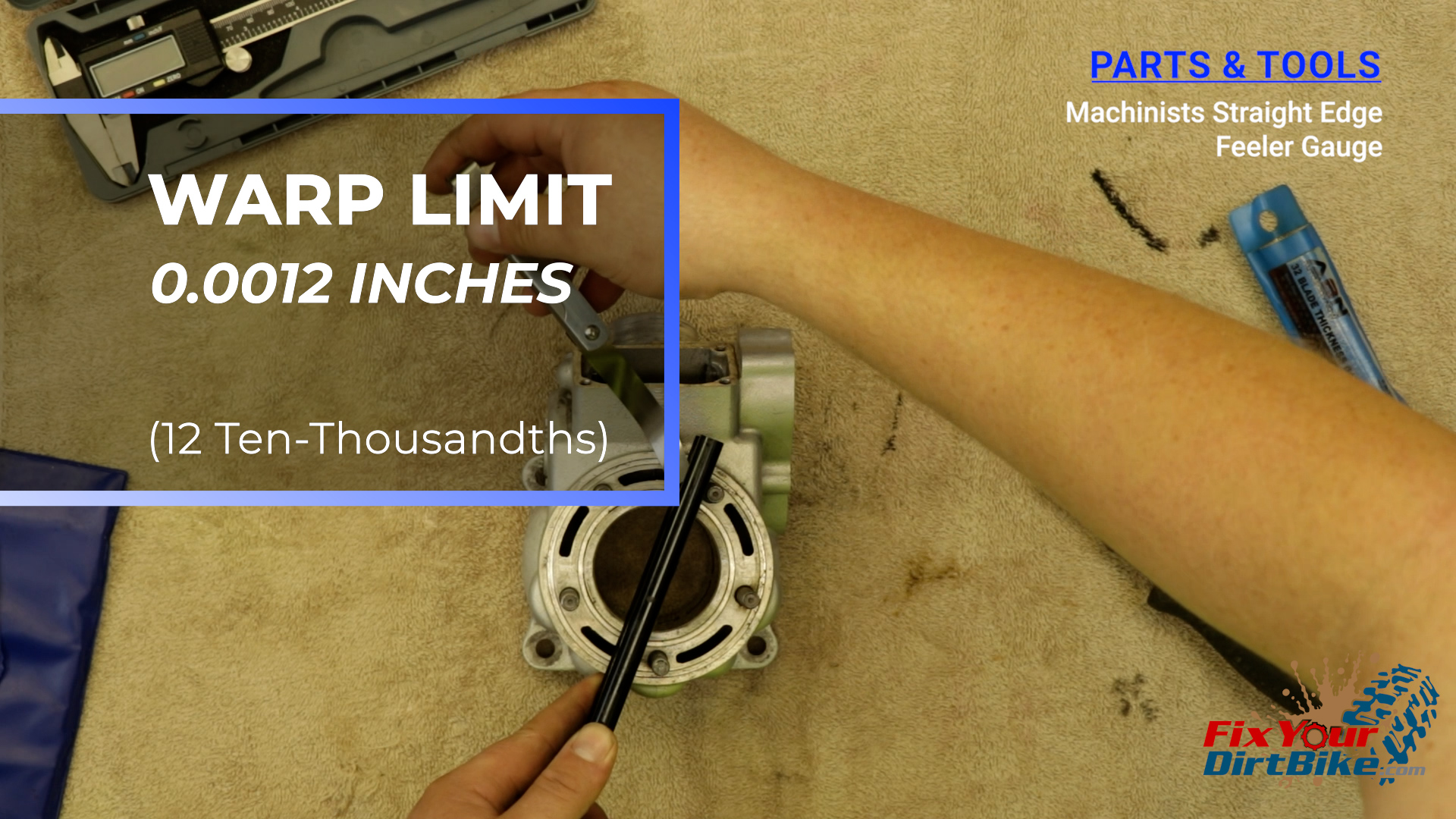
6 – The warp limit for the cylinder is 0.0012 inches Cylinder Bore Inspection
- Before you measure the cylinder bore, visually inspect it.
- If you feel a defined lip at the top of the cylinder bore where the piston rings stop, or if the plating is chipped or damaged around the intake, exhaust, and transfer ports, it needs to be replated.
- This cylinder is in excellent condition considering the unusual wear on the piston. The intake side is slightly marked, but is still smooth, so I’m comfortable with reusing it as long as it’s within spec.
Cylinder Bore Measurements
- Draw out a chart to keep track of your measurements.
- Measure your cylinder at three locations.
- Yamaha does not provide a specific measurement depth.
- Without a specific location, I measure 10mm from the top, the middle, and 10mm from the bottom.
- Label these locations A, B, and C.
- Take measurements front to back and side to side.
- Measure, then re-measure, and write down all your measurements.
- All measurements should be between 54.000 and 54.014 mm
- I am using a simple bore gauge and caliper method to measure my cylinder bore.
- I recommend this method, as it is inexpensive and you can use your gauges and calipers for other inspections. A dial bore gauge will work, that’s what it’s for after all, but it’s a one-trick pony, and may not be worth the investment.
- When releasing the set screw on your bore gauge, DO NOT let it snap back into full extension; it will be damaged.
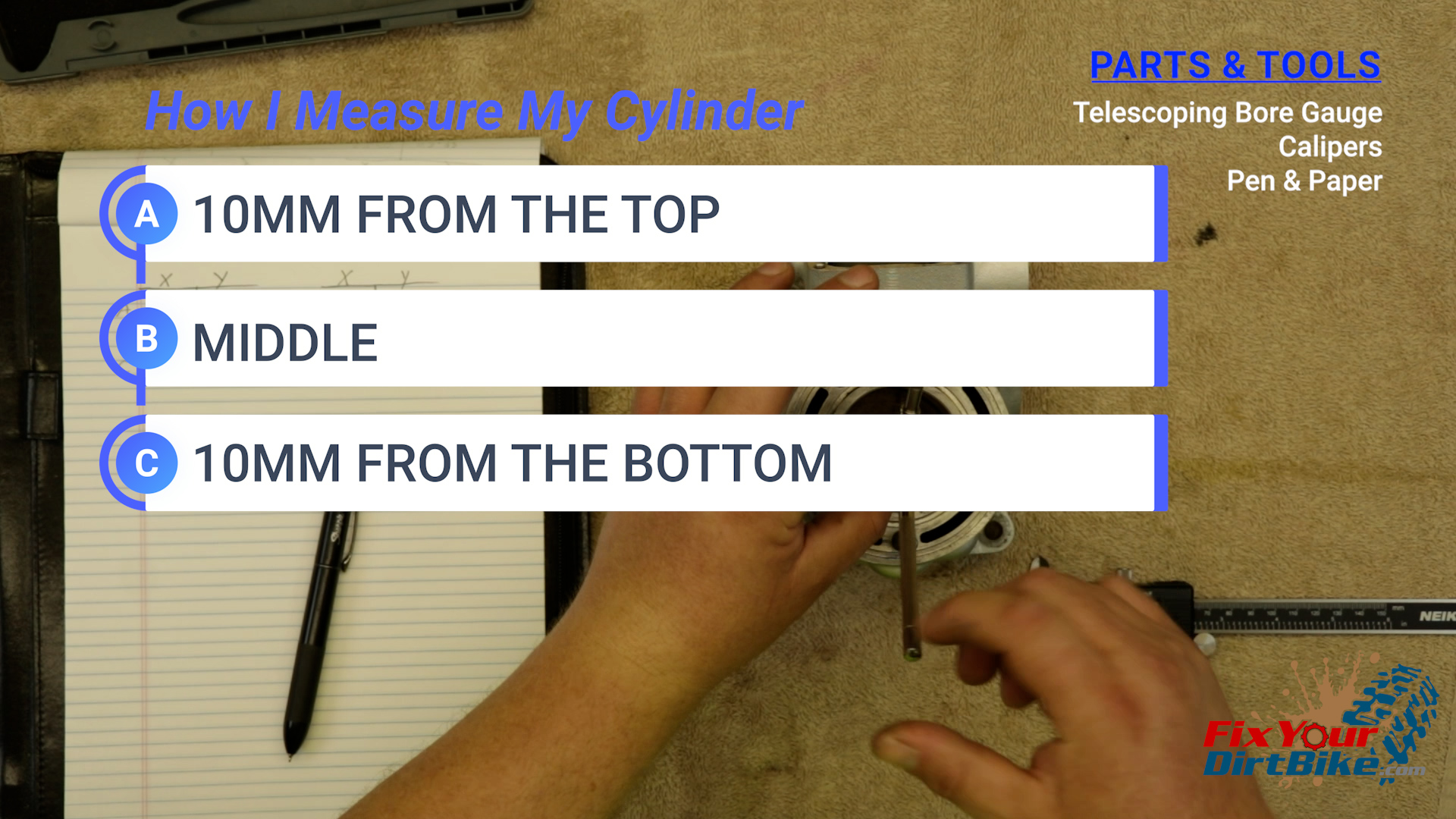
7 – Without a specific location, I measure 10mm from the top, the middle, and 10mm from the bottom 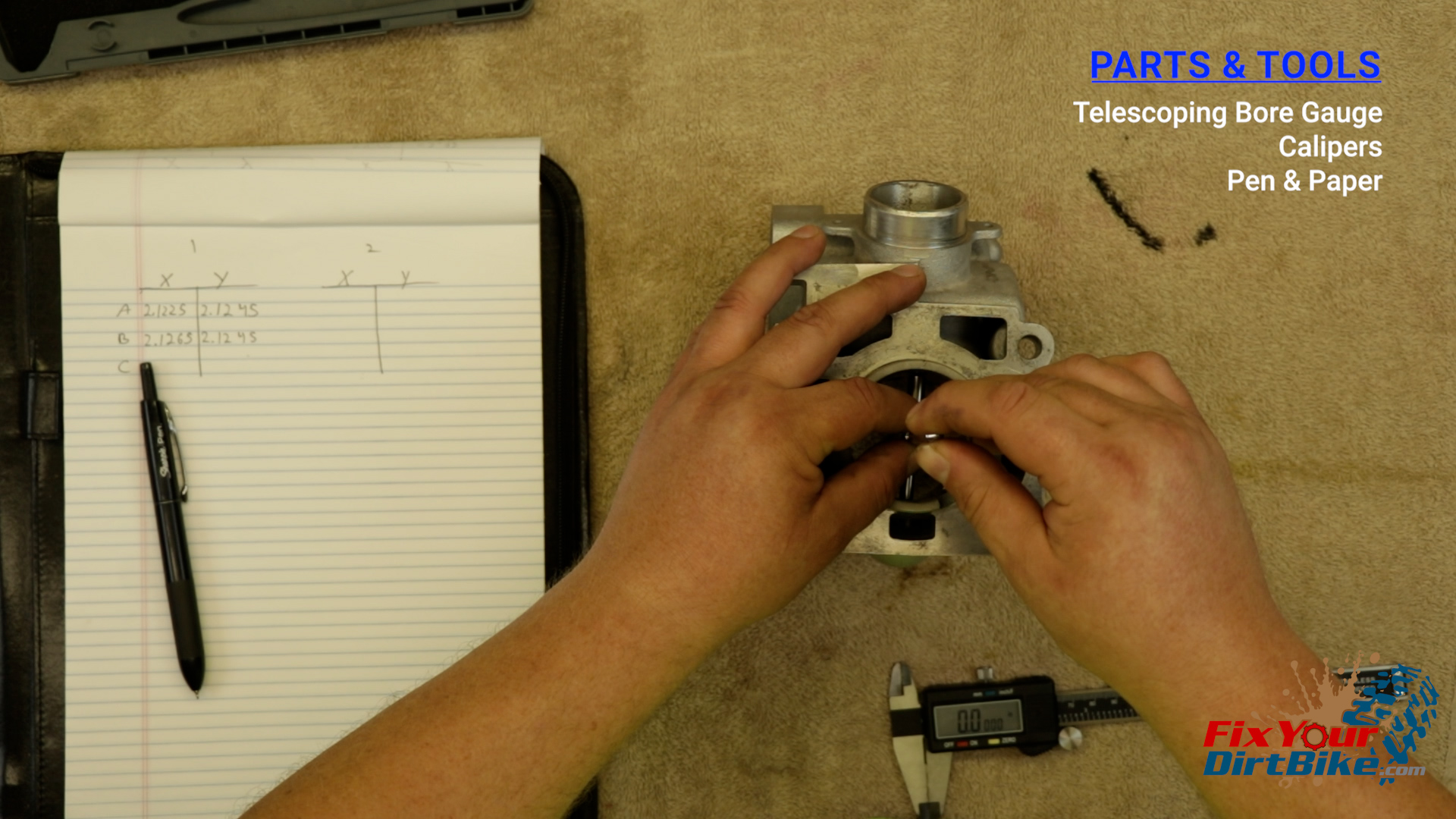
8 – Measure, then re-measure, and write down all your measurements. 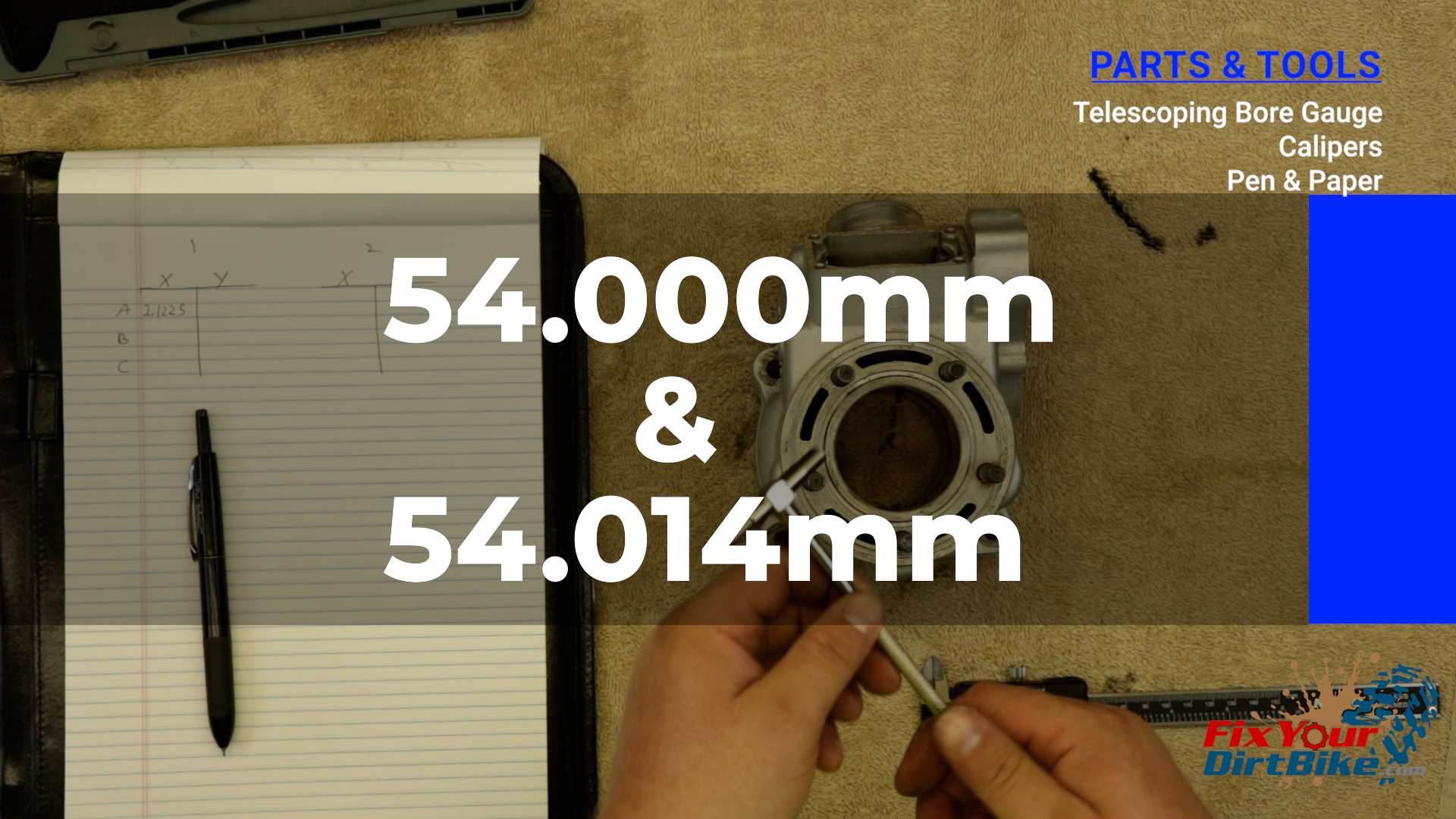
9 – All measurements should be between 54.000 and 54.014 mm Cylinder Cleaning
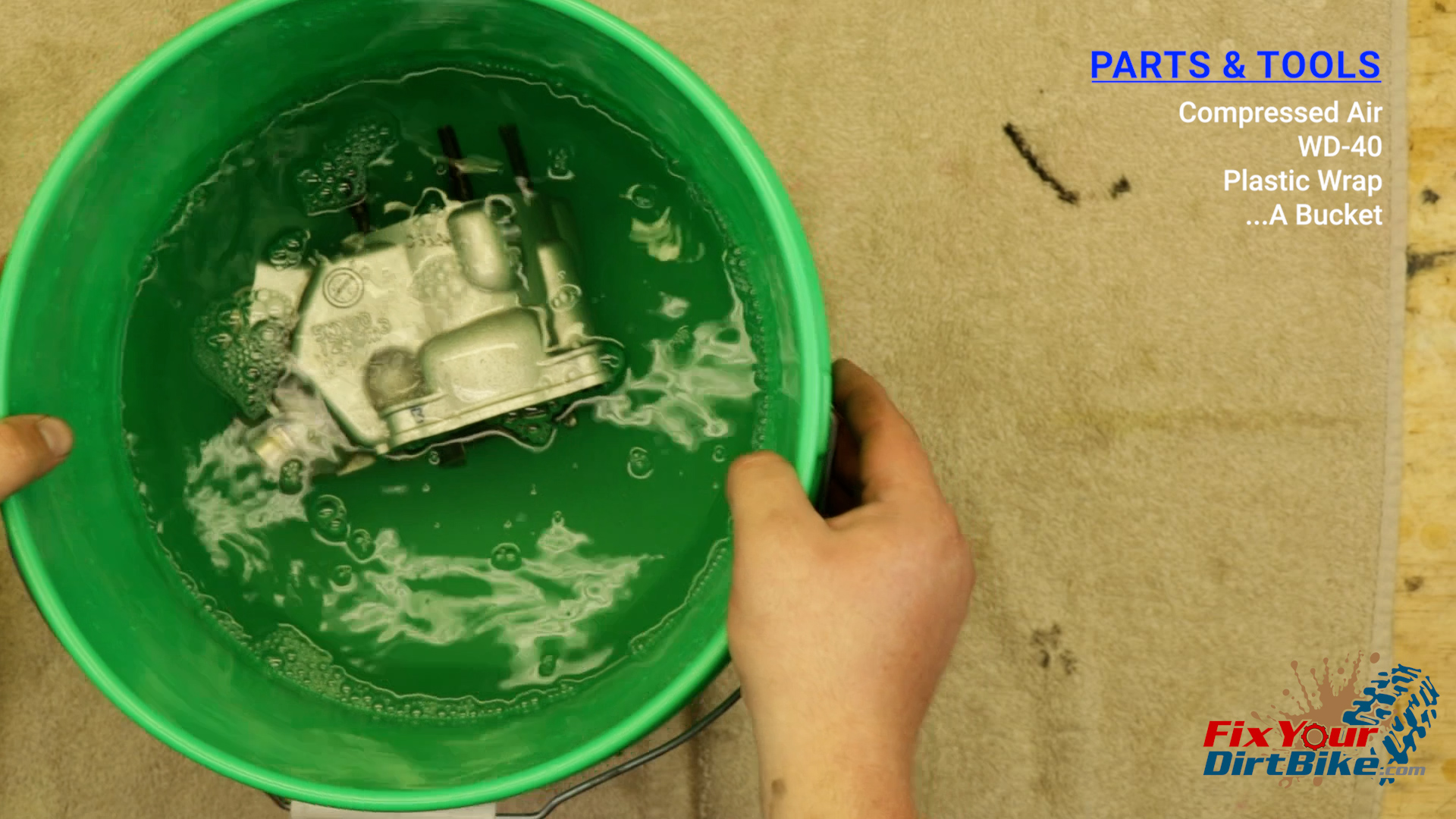
- Wash your cylinder in hot soapy water with a cylinder brush, then dry with compressed air.
- Apply a thin coat of WD-40 to the cylinder walls to inhibit oxidation, and wrap your cylinder in plastic wrap until you are ready for assembly.
If you have any questions, please let me in the comments, or send me a DM!
| ← Cylinder Head Inspection | Piston Inspection → |
Follow Fix Your Dirt Bike!